
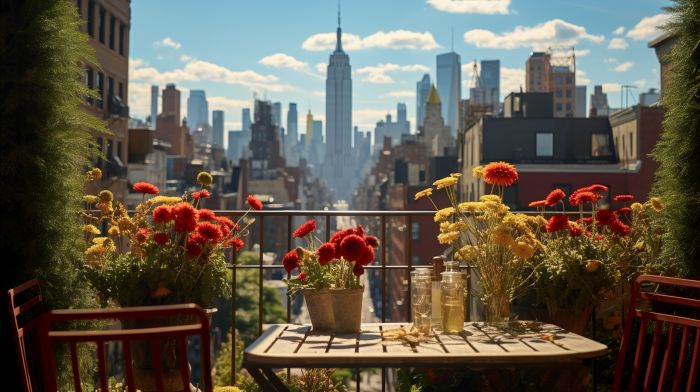
Planners in Manhattan have a running joke: the higher you go, the harder people say yes. Send an invitation for a ground-floor conference room and half the replies drift in as maybes. Put a skyline behind the same agenda and suddenly everyone clears their calendar. It sounds superficial. It isn’t. The shift toward elevated venues reflects something real about how people want to gather now, and it has quietly reshaped the map of where the city’s memorable events actually happen.
For years, the default assumption was that a good corporate gathering needed a hotel ballroom or a convention hall. Big, neutral, forgettable. That assumption has been eroding since well before the pandemic, and it collapsed almost entirely afterward. When teams started meeting in person again, nobody wanted to spend the reunion under fluorescent lights. They wanted air, light, and a sense of occasion. A well-chosen rooftop event space in New York City delivers all three at once, which is why so many companies now treat the roofline as the first filter in their venue search rather than an afterthought.
The appeal is practical, not just pretty
It would be easy to write this off as vanity. A skyline photo does look good on a recap deck. But the practical case is stronger than the aesthetic one.
Open-air and light-filled spaces change how people behave. Attendees mingle more freely when they aren’t boxed into a windowless rectangle. Conversations spread out instead of clustering near the exits. Presenters get a room that feels alive rather than sedated. Anyone who has run a full-day offsite knows the afternoon energy crash is a genuine problem, and natural light does more to fight it than a third round of coffee.
There’s also a scheduling logic to it. New York summers are short and everyone knows it, so demand for outdoor and semi-outdoor spaces compresses into a handful of months. Smart planners book early and treat a covered rooftop or a loft-plus-terrace combination as insurance. If the weather turns, you retreat indoors without losing the event. If it holds, you get the version people talk about for a year.
What “rooftop” actually means in a dense city
Here’s where the category gets misunderstood. In a city as vertical as New York, a rooftop is rarely just a flat deck with some string lights. The good ones are architectural experiences in their own right.
Take the stretch of NoHo and the surrounding blocks below 14th Street. These are old buildings, many of them cast-iron or brick structures dating to the 1800s, and their roofs come with texture that newer towers can’t fake. Original water tanks, unusual sightlines, brickwork that has been standing since before the subway existed. When a venue leans into that history instead of papering over it, the roof stops being a platform and becomes part of the story you’re telling your guests.
The best of these spaces pair the outdoor level with an interior loft directly below. That combination is the quiet workhorse of the New York events scene. Cocktails and a first impression up top, dinner or programming in the loft, and a flow between the two that keeps the evening moving. Guests never feel parked in one spot for three hours, which is usually the difference between an event that ends early and one where people linger.
Corporate demand is driving the market
Weddings and milestone parties still fill the calendar, but the sharpest growth has come from the corporate side. Brand activations, product launches, investor dinners, recruiting mixers, holiday parties that actually need to impress. Companies figured out that a distinctive venue does real work for them.
Consider the recruiting angle. A startup competing for engineers against Google or a hedge fund can’t win on brand recognition alone, but it can host a candidate dinner somewhere that signals taste and seriousness. The venue becomes an argument. The same logic applies to client entertainment. A skyline backdrop and a thoughtful room say more about how a firm operates than any pitch deck.
Then there’s the content dimension, which almost nobody planned for a decade ago and everyone plans for now. Every event is also a shoot. Marketing teams need footage, social clips, photos that make the brand look like it belongs at altitude. A memorable setting produces that material automatically. A beige ballroom produces the opposite, which is to say nothing anyone wants to post.
The tradeoffs worth knowing
None of this comes free, and anyone selling you a frictionless rooftop is skipping the fine print.
Logistics get harder as you go up. Load-in through a single freight elevator, catering staged in tight quarters, sound that has to respect residential neighbors below. Weather is the obvious wildcard, but wind matters more than people expect; a gusty evening can turn a beautiful terrace into a place where nobody can hear the toast. The venues that handle this well have invested in the unglamorous infrastructure: proper kitchens on site, real audiovisual rigging, staff who have run the same load-in a hundred times.
Budget is the other reality. Elevated spaces in Manhattan command a premium, and the range runs wide depending on season, headcount, and how much production the event needs. A weekday afternoon meeting for thirty is a different number than a Saturday evening reception for three hundred. The mistake planners make is comparing sticker prices without accounting for what’s bundled. A venue with in-house catering, beverage service, and AV can end up cheaper than a “blank canvas” space once you add the vendors it forces you to hire.
How to judge a space before you book
A few questions separate the genuinely good options from the merely photogenic ones.
Ask what the rain plan is, in specific terms, and watch whether the answer is rehearsed or improvised. Ask about capacity for both a seated dinner and a standing reception, because the two numbers are rarely close. Ask how food gets from the kitchen to the roof, and how long that takes, since a slow path means cold plates. Ask what’s included and what triggers an extra invoice. And walk the flow yourself if you can, tracing the path a guest takes from street to elevator to the moment the skyline opens up in front of them. That sequence is the whole experience compressed into ninety seconds.
The venues that get New Yorkers talking tend to nail that arrival moment. You come up out of a working downtown block, step onto a roof surrounded by old water tanks and open sky, and the city rearranges itself below you. It’s a small piece of theater, and it does more for an event’s reputation than any line item on the budget.
The move upward isn’t a fad that will pass with the next design cycle. It reflects a durable preference for gatherings that feel like something rather than nothing, in a city that has always rewarded people willing to look up.